
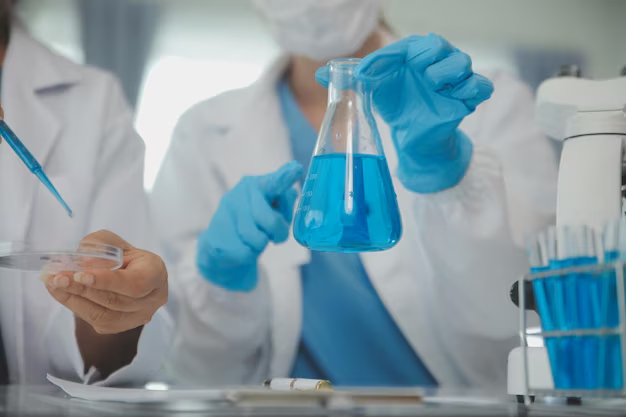
For families in Queens, concerns about water quality often arise from aging infrastructure or changes in tap water appearance. While New York City’s municipal water is generally considered high-quality, testing for bacteria remains an essential way for homeowners to gain objective data about their specific home environment.
What Bacteria Testing Reveals
Bacteria testing does not usually scan for every possible pathogen in existence; instead, it uses “indicator organisms” to determine the sanitary condition of your water.
- Total Coliform Bacteria: This is the primary “red flag” test. Coliforms are a broad group of bacteria found in soil, surface water, and the digestive tracts of animals and humans. If these are present, it suggests that the environment protecting your water supply—whether municipal pipes or private plumbing—has been compromised, potentially allowing other, more dangerous pathogens to enter.
- E. coli: A specific type of coliform, E. coli is found in the intestines of warm-blooded animals. A positive result for E. coli is a serious indicator of fecal contamination, which signals an immediate health risk.
- The “Snapshot” Reality: It is important to remember that a water test is a “snapshot” in time. Because bacterial contamination can be intermittent (such as after a major storm or a localized water main break), a single test result doesn’t guarantee your water will remain bacteria-free forever.
Why You Can’t Rely on Senses Alone
Many families assume that if the water looks clear, smells fine, and tastes normal, it must be safe. This is a dangerous misconception. The most harmful bacteria—and the indicator organisms like coliforms—are often invisible, odorless, and tasteless. Professional laboratory testing is the only reliable way to confirm the presence of these microorganisms.
Taking Action in Your Home
If you are concerned about your water quality in Queens, follow these steps:
- Assess for Changes: Be alert to persistent changes in water quality, especially after local construction or plumbing work. While city-wide issues are typically reported by the NYC Department of Environmental Protection, local internal plumbing issues are the homeowner’s responsibility.
- Use Certified Labs: Do not rely on unverified DIY kits. To get an accurate result, use a laboratory that follows EPA-approved methods for sample collection and analysis.
- Sanitary Sampling: If you choose to collect a sample, follow the lab’s instructions precisely. This usually involves removing aerators and sanitizing the faucet to ensure the bacteria detected are actually in your water supply and not just on the surface of your tap.
- Consult Experts: If you receive a positive test result, do not panic. Contact a licensed plumber or a water quality specialist to help identify the source of the contamination, such as a leaking pipe, cross-connection, or issues with a home filtration system.
When to Be Extra Cautious
Families with members who are elderly, have weakened immune systems, or are very young should be particularly proactive. These individuals are at a higher risk for illness from waterborne pathogens. If your home has undergone recent major plumbing renovations or if you live in a building with very old service lines, periodic testing provides a baseline of safety that can catch issues before they affect your family’s health.
Are you looking to schedule a professional assessment of your home’s water safety?
You may want to explore our professional testing services or read more about why you should hire a water testing company to understand the importance of laboratory-grade analysis versus simple at-home spot checks. For any specific questions about your property in Queens, please contact us today.